
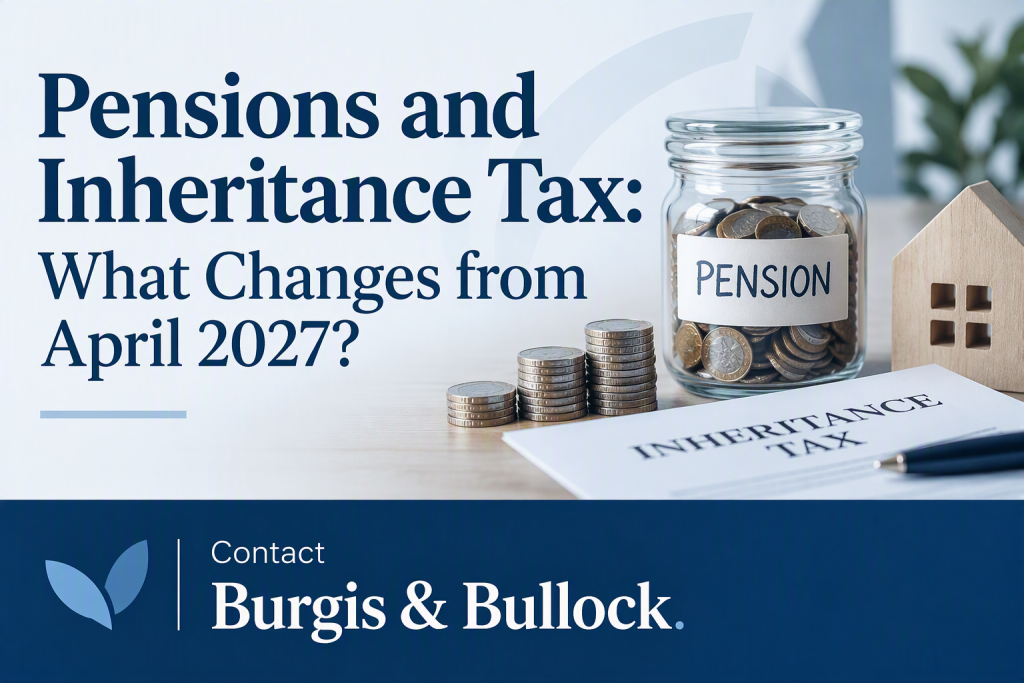
From 6 April 2027, most unused pension funds and pension death benefits will be counted as part of your estate for Inheritance Tax (IHT). Put simply, families who had expected a pension to pass outside the estate could face a bigger tax bill than they had planned for.
The change applies if the pension scheme member dies on or after 6 April 2027. If they die before then, the current rules will normally apply, even if the pension is paid later. There are some exclusions, including death-in-service benefits from registered pension schemes and certain dependant’s pensions, but most unused pension savings will be caught.
Why this matters
Until now, pensions have usually been treated differently from other assets when someone dies. That has encouraged many people to spend savings and investments first and leave their pension untouched for their children or grandchildren. From April 2027, that may no longer work as intended.
It would be easy to assume this only affects the very wealthy. In reality, a family home, some investments and a decent pension can quickly use up the available IHT allowances. Once the pension is added to the calculation, more of the estate may be taxed.
There may also be Income Tax to pay when a beneficiary takes money from an inherited pension. This will depend on matters such as the member’s age when they died and how the benefits are taken. The important point is that IHT and Income Tax need to be looked at together. Solving one tax problem could easily create another.
Who should review their position?
This is worth looking at now if any of the following sound familiar:
- You have significant unused pension savings.
- Your home, investments and pension together may exceed the IHT allowances available to your estate.
- Your current plan is to use other assets first and preserve your pension for your family.
- Your pension nomination or expression-of-wish forms have not been reviewed recently.
- Your Will, pension arrangements or wider estate plan were put in place several years ago.
- You own a business and your pension forms part of your retirement or succession strategy.
A simple example
Take someone whose home and investments already use most of their available IHT allowances. They also have a substantial pension which they have deliberately left untouched, expecting it to pass outside their estate. If they die on or after 6 April 2027, adding that pension to the IHT calculation could create an extra tax bill. The precise position will depend on the figures, the beneficiaries and the reliefs available, but the message is simple: the pension can no longer be considered on its own.
What should you do now?
The first reaction may be to start taking money out of the pension before the rules change. That could be the wrong move. It may create an unnecessary Income Tax bill, reduce future investment growth or leave you with less money later in retirement. There is no standard answer; it needs to be based on your circumstances and the numbers.
Start by looking at:
- the likely value of your pension and other assets;
- which IHT allowances, exemptions and reliefs may be available;
- who you want to benefit and in what proportions;
- whether your Will and pension nominations still reflect your wishes;
- how much income and capital you are likely to need in retirement;
- whether lifetime gifts, insurance or other planning options should be considered; and
- for business owners, how the changes interact with succession and exit plans.
April 2027 may feel some way off, but leaving this until the last minute would be a mistake. The sensible approach is to model the figures now, understand the trade-offs and give yourself time to make proper decisions. What worked well in the past may no longer be the right answer.
A conversation worth having now
We can help you put the figures together, see whether the change creates a real exposure and talk through the options. This is not about making changes for the sake of it. It is about making sure your pension, Will and wider plans still do what you want them to do.
If this has made you question whether your current plans still work, get in touch. We can look at your position and tell you plainly whether there is an issue worth dealing with before April 2027. further information, please contact Burgis & Bullock.
 free making tax digital briefing