
Some VAT rules have changed and, while they may sound technical, the impact is quite straightforward. If your business pays for fuel and any of your vehicles are used privately, this is relevant to you.
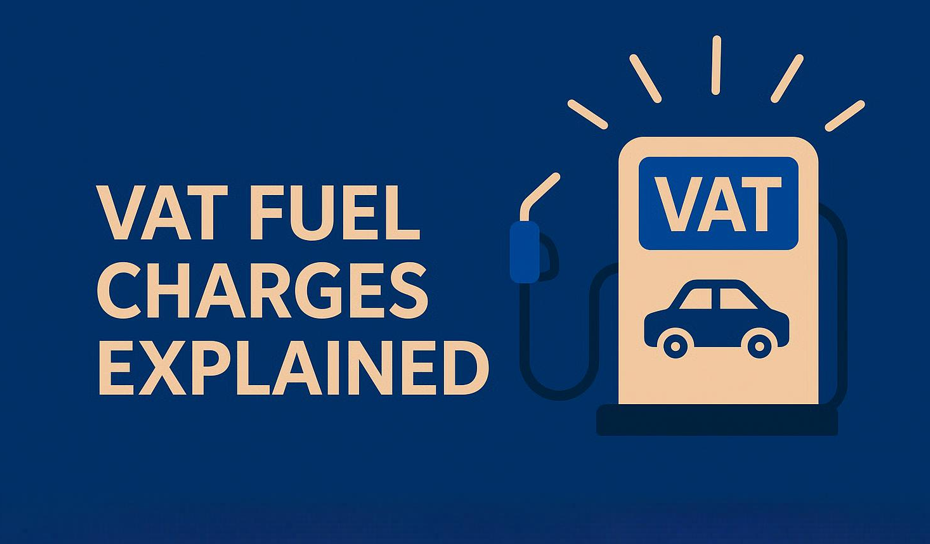
From 1 May 2026 to 30 April 2027, HMRC has introduced updated VAT fuel scale charges. In simple terms, these are used to adjust the VAT you’ve reclaimed on fuel when that fuel isn’t used purely for business purposes.
If you reclaim VAT on fuel, HMRC assumes that some of it is used privately, such as for commuting or personal trips. Instead of asking you to record every mile, they apply a fixed adjustment to your VAT return to account for that private use. This is known as the fuel scale charge.
What’s changed is the rate of the charge itself. How much you pay now depends on two factors: the car’s CO₂ emissions and how often you submit your VAT return – monthly, quarterly or annually. Put simply, the higher the emissions, the more you’ll pay. Lower-emission cars sit at the cheaper end of the scale, while higher-emission vehicles can push your VAT costs up quite noticeably over the course of a year.
It’s important not to fall into the trap of sticking with the scale charge just because it’s simple. Convenience doesn’t always mean it’s the most cost-effective option.
Broadly, you have three approaches: use the scale charge, which is straightforward but not always the cheapest; reclaim VAT only on business mileage, which is more accurate but requires more record-keeping; or don’t reclaim VAT on fuel at all, which is the simplest option but means missing out on potential savings.
Many businesses default to the scale charge out of habit, but this can lead to overpaying VAT – particularly if private use is low. On the other hand, if there’s a high level of personal use, the scale charge can still be a practical, low-effort solution.
There’s also a wider point to consider. Because the charge is linked to emissions, your choice of vehicle has a directly affects your VAT position. Opting for lower-emission cars can reduce the charge, while fully electric vehicles avoid it altogether.
This means the update isn’t just about staying compliant – it’s an opportunity to take a more strategic look at how your vehicles are managed from a tax perspective.
From a practical standpoint, you should make sure your VAT returns are using the updated rates from your first accounting period starting on or after 1 May 2026. It’s also a good time to review whether the scale charge is still right for your business and to consider whether your current vehicles are costing you more in VAT than they need to.
Ignoring this change risks either overpaying VAT or getting your return wrong, neither of which is ideal.
The bottom line is simple: this is a small change that can have a noticeable impact on your costs. Taking a bit of time to review your approach now could save you money – and prevent issues – over the year ahead.
To find out more, contact your local Burgis & Bullock office www.burgisbullock.com/contact-us/
 free making tax digital briefing