
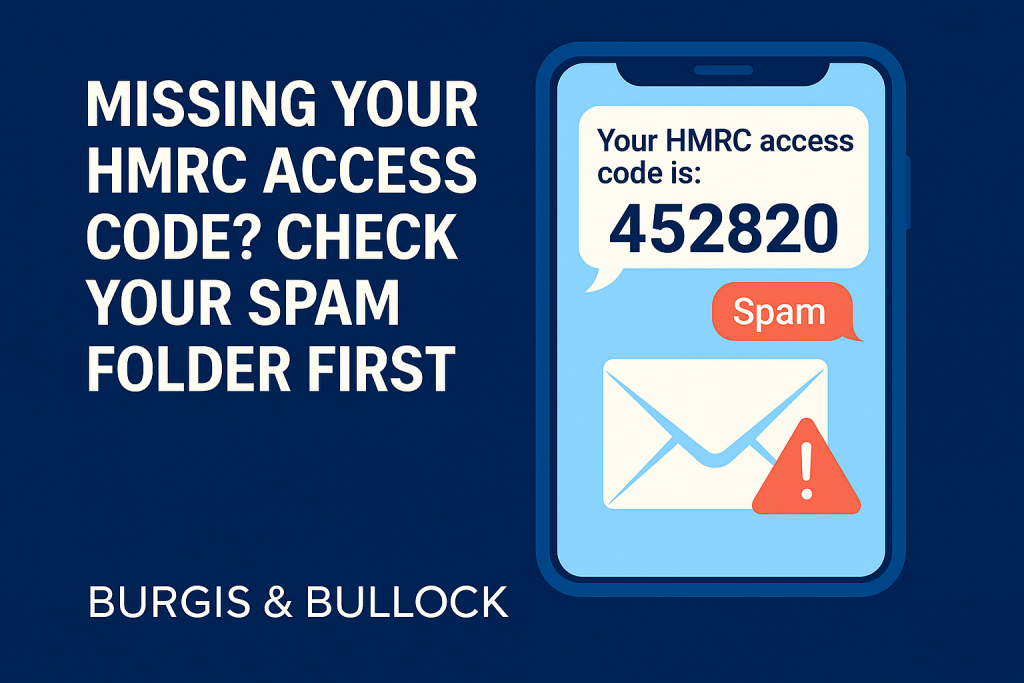
If your HMRC access code hasn’t arrived, don’t panic – it’s often hiding in your spam or junk folder.
Spam Folders Aren’t Just for Emails
“Most people know their email inbox has a spam or junk folder, but fewer realise text messages can have one too,” says Dale Southworth, a Manager at Burgis & Bullock. “Modern smartphones and network providers often filter messages they think look suspicious – such as those containing links or codes – from unknown senders. HMRC texts can sometimes get caught in this net.”
Why This Matters Now
With HMRC tightening ID verification for directors, more people will be logging into existing Government Gateway accounts. If your access code doesn’t appear, don’t assume HMRC hasn’t sent it. Check your spam folder first.
Failing to do so can lead to unnecessary delays, missed deadlines, and even compliance headaches.
Dale continued: “There are practical tips you can follow such as whitelisting HMRC’s official numbers to your contacts; check your filters regularly especially if you have updated your phone and don’t ignore unknown senders as that’s often where legitimate codes hide.
“In addition, before you panic or request a new code, take 30 seconds to check your spam folder. It could save you hours of frustration – and keep your compliance on track.”
For further information, contact Dale Southworth at: dale.southworth@burgisbullock.com or speak to a member of the Burgis & Bullock team https://www.burgisbullock.com/contact-us/
 free making tax digital briefing